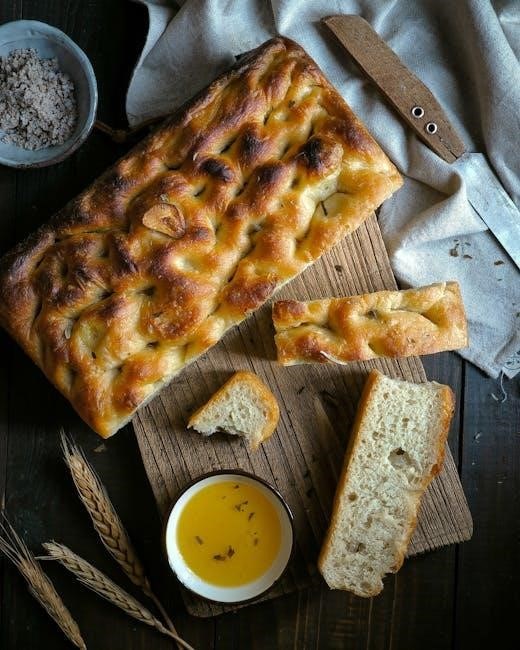
Flour Water Salt Yeast unveils the secrets to exceptional artisan bread and pizza, offering a complete baking education for home cooks of all skill levels.
The Core Four Ingredients
Flour, water, salt, and yeast – these seemingly simple components are the foundation of nearly every bread recipe globally. Ken Forkish’s work emphasizes mastering these basics, revealing how their interaction dictates the final product’s quality. Understanding each ingredient’s role is paramount; flour provides structure, water hydrates and activates gluten, salt controls fermentation and enhances flavor, and yeast creates the rise.
The book meticulously details how manipulating these elements, even slightly, dramatically alters the bread’s texture and taste, empowering bakers to achieve consistent, bakery-quality results at home.
Ken Forkish and the Artisan Bread Revolution
Ken Forkish, a celebrated Portland baker, ignited a home baking revolution with Flour Water Salt Yeast. He demystified artisan bread making, proving exceptional loaves and Neapolitan-style pizzas were achievable for anyone. His approach focuses on technique and understanding ingredients, rather than complex equipment.
Forkish’s recipes, developed in his own kitchen, prioritize quality and accessibility, inspiring a generation of bakers to embrace the rewarding process of crafting bread from scratch.
Understanding Flour
Flour, a cornerstone of bread, varies greatly; selecting the right type is crucial for texture and flavor, impacting gluten development significantly.
Types of Flour for Bread Baking
Ken Forkish’s book emphasizes the importance of flour selection, detailing various types suited for different bread styles. Bread flour, with its higher protein content, is ideal for robust loaves, fostering strong gluten development. All-purpose flour offers versatility but may yield a less chewy texture.
Whole wheat flour introduces a nutty flavor and denser crumb, requiring adjustments to hydration. ‘00’ flour, finely milled Italian flour, excels in pizza dough, creating a delicate, extensible texture. Understanding each flour’s characteristics empowers bakers to achieve desired results, tailoring their creations to specific preferences and recipes.
Gluten Development and its Importance
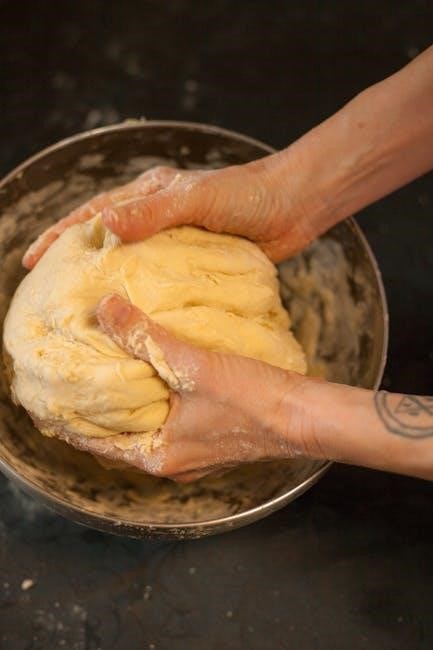
“Flour Water Salt Yeast” meticulously explains gluten development as central to bread structure. Gluten, formed when flour proteins interact with water, provides elasticity and strength. Proper kneading is crucial, aligning gluten strands for optimal dough extensibility.
Forkish details how factors like flour type and hydration influence gluten formation. Sufficient gluten development traps gases produced by yeast, resulting in a light, airy crumb. Understanding this process allows bakers to control dough behavior, achieving desired texture and volume in their baked goods.
The Role of Water
Water activates yeast, dissolves salt, and crucially, develops gluten when combined with flour, forming the dough’s structure and impacting its final texture.
Hydration Levels and Dough Consistency
Understanding hydration – the ratio of water to flour – is paramount in bread baking. “Flour Water Salt Yeast” emphasizes how varying hydration levels dramatically affect dough consistency. Lower hydration yields a stiffer, easier-to-handle dough, ideal for sculpted loaves. Conversely, higher hydration creates a wetter, stickier dough, resulting in open crumb structures and airy textures, commonly found in artisan breads.
Forkish details how to adjust hydration based on flour type and desired outcome, teaching bakers to feel the dough and recognize appropriate consistency rather than strictly following percentages. Mastering this skill unlocks a deeper understanding of dough behavior.
Water Temperature and Yeast Activity
“Flour Water Salt Yeast” meticulously explains the crucial link between water temperature and yeast activity. Warm water (around 95-105°F / 35-40°C) optimally activates yeast, initiating fermentation and dough rise. However, excessively hot water can kill the yeast, hindering the baking process.
Conversely, cold water slows yeast activity, extending fermentation times – a technique useful for developing complex flavors. Forkish guides bakers in adjusting water temperature based on ambient conditions and desired fermentation speed, ensuring consistent results.
Salt’s Contribution to Bread
Salt enhances flavor and crucially strengthens gluten, controlling yeast activity for a balanced fermentation, resulting in a superior bread structure and taste.
Flavor Enhancement
Beyond its technical roles, salt profoundly impacts the final flavor profile of bread. It doesn’t simply make bread “salty”; instead, it acts as a flavor potentiator, enhancing the existing flavors of the flour and other ingredients. This subtle yet crucial contribution brings depth and complexity to the loaf. Without sufficient salt, bread tastes flat and uninteresting, lacking the nuanced character that distinguishes truly great bread. Ken Forkish emphasizes this point, highlighting salt’s ability to unlock the inherent sweetness within the flour, creating a more balanced and satisfying taste experience for the baker and the consumer alike.
Gluten Strengthening
Salt plays a vital, often underestimated, role in strengthening the gluten network within dough. Gluten, formed from proteins in flour when hydrated, provides structure and elasticity. Salt tightens and reinforces these gluten strands, making the dough more manageable and capable of holding its shape during fermentation and baking. This strengthening effect is crucial for achieving a good rise and a desirable crumb structure. Without adequate salt, the dough can become slack and overly extensible, resulting in a flat, dense loaf lacking the airy texture characteristic of well-made bread.
Yeast: The Leavening Agent
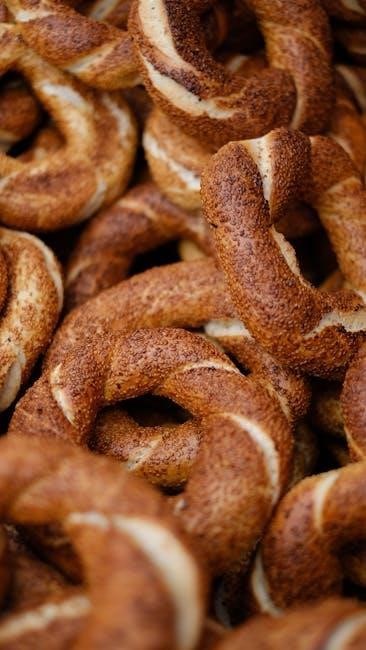
Yeast, whether commercial or wild sourdough, is the essential leavening agent, producing gases that create the airy texture and characteristic rise in baked goods.
Types of Yeast (Commercial, Wild/Sourdough)
Ken Forkish’s book thoroughly explores yeast options, detailing both commercial and wild varieties. Commercial yeasts, readily available in active dry or instant forms, offer consistent and predictable results for bakers seeking convenience. Conversely, wild yeasts, cultivated through sourdough starters, introduce complex flavors and require more attentive care.
Sourdough relies on naturally occurring yeasts and bacteria, demanding regular feeding and observation. The book emphasizes that understanding each yeast type’s characteristics—activity level, flavor profile, and handling requirements—is crucial for achieving optimal bread quality and mastering the art of fermentation.
Yeast Activation and Proofing
“Flour Water Salt Yeast” meticulously guides bakers through yeast activation and the crucial proofing process. Activation, particularly for dry yeast, involves dissolving it in warm water with a touch of sugar to confirm viability. Proofing, the subsequent fermentation stage, allows yeast to consume sugars, producing carbon dioxide for leavening and developing flavor.
Forkish stresses observing dough volume and texture, rather than strictly adhering to time, as key indicators of proper proofing. Understanding environmental factors like temperature significantly impacts proofing speed, ensuring optimal results.

Key Concepts from the Book
“Flour Water Salt Yeast” centers around baker’s percentages for precise recipe scaling and pre-ferments like poolish and levain for enhanced flavor development.
Baker’s Percentages Explained
Ken Forkish champions baker’s percentages, a system where flour weight equals 100%, and all other ingredients are expressed as percentages of that flour weight. This method, detailed in “Flour Water Salt Yeast,” ensures consistent results regardless of batch size, fostering a deeper understanding of ingredient ratios. It allows bakers to easily scale recipes up or down, and to creatively adjust formulas for unique flavor profiles and dough characteristics. Forkish emphasizes this isn’t merely a mathematical tool, but a pathway to intuitive baking, enabling adaptation and experimentation with confidence.
Pre-Ferments: Poolish, Biga, and Levain
“Flour Water Salt Yeast” dedicates significant attention to pre-ferments – Poolish, Biga, and Levain – highlighting their crucial role in developing complex flavors and textures. Poolish, a wet pre-ferment, yields open crumb structures. Biga, drier, contributes to a chewier texture. Levain, a sourdough starter, introduces tangy notes and extended fermentation. Forkish meticulously explains each pre-ferment’s creation and application, demonstrating how they enhance dough strength, improve flavor, and ultimately elevate the final baked product, offering bakers greater control.
Recipes Featured in “Flour Water Salt Yeast”
The book showcases basic bread recipes, alongside detailed instructions for crafting Neapolitan-style pizza dough, enabling bakers to achieve professional results at home.
Basic Bread Recipes
Ken Forkish’s Flour Water Salt Yeast provides foundational bread recipes, meticulously detailed for home bakers. These include straightforward, straight dough loaves, perfect for beginners seeking to grasp core techniques. The book emphasizes achieving exceptional results with minimal complexity, focusing on mastering fundamental skills. Recipes cover variations in flour types and hydration levels, allowing for experimentation. Forkish’s approach prioritizes understanding ingredient interactions, empowering bakers to confidently create consistently delicious, high-quality bread. These recipes serve as building blocks for more advanced techniques and flavor profiles explored throughout the book, establishing a solid base for artisan bread baking.
Pizza Dough Recipes
Flour Water Salt Yeast doesn’t neglect pizza aficionados, featuring Neapolitan-style pizza dough recipes developed by Ken Forkish in his own kitchen. These recipes prioritize achieving a perfectly blistered, chewy crust, characteristic of authentic Neapolitan pizza. The book details techniques for managing hydration and fermentation, crucial for optimal dough development. Forkish provides guidance on achieving the right dough consistency and handling methods, ensuring successful pizza making at home. Variations explore different flour types and fermentation schedules, allowing bakers to customize their pizza dough to their preferences.

Techniques Demonstrated in the Book
Flour Water Salt Yeast expertly guides bakers through essential techniques like dough handling, shaping, and achieving superior results using Dutch ovens for baking.
Dough Handling and Shaping
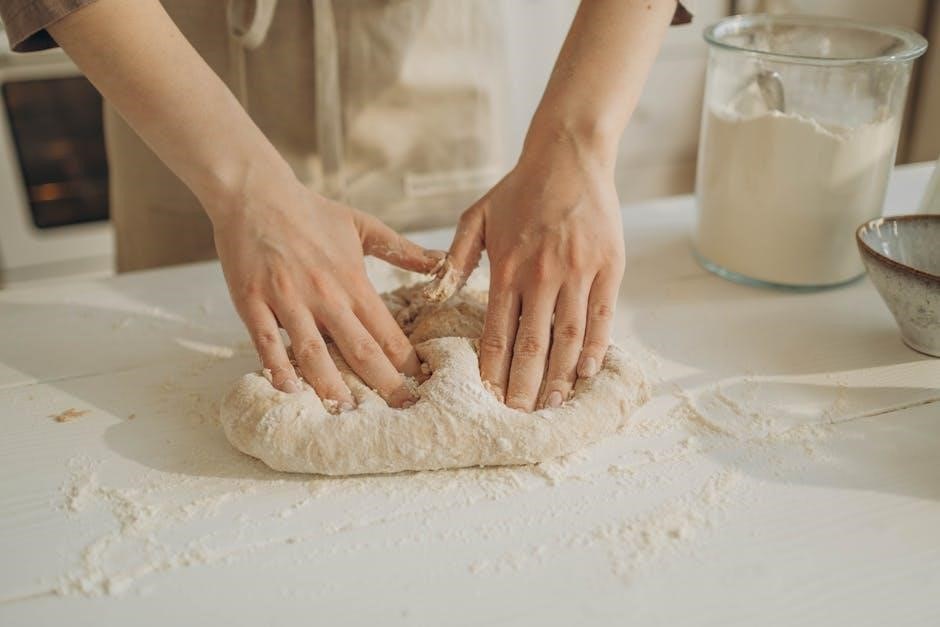
Flour Water Salt Yeast emphasizes the importance of developing tactile skills for assessing dough consistency and strength. The book details various techniques for gentle yet effective kneading, crucial for gluten development. It provides clear instructions on pre-shaping, bench scraping, and final shaping methods, tailored to different bread styles.
Forkish’s approach stresses minimal handling to preserve dough structure and gas retention. Detailed guidance is given on creating tension during shaping, leading to loaves with beautiful rise and crumb. Mastering these techniques unlocks the potential for consistently excellent results.
Baking with Dutch Ovens
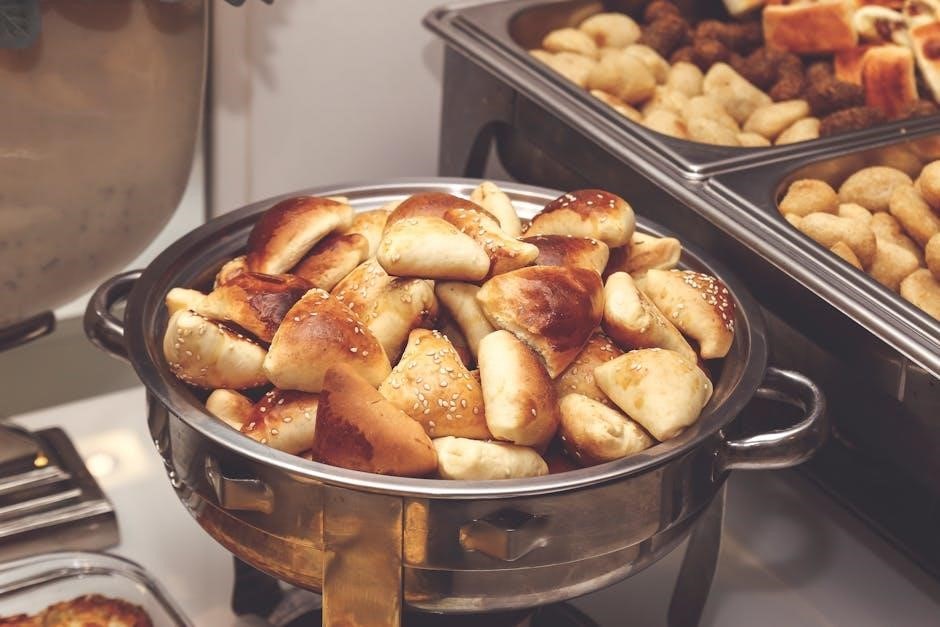
Flour Water Salt Yeast champions the use of Dutch ovens for achieving exceptional crust and oven spring. The enclosed environment traps steam, creating a moist baking atmosphere ideal for developing a deeply caramelized crust. Forkish meticulously explains preheating techniques and proper Dutch oven usage.
He details how to carefully transfer dough into the hot pot and adjust baking times accordingly. This method consistently yields loaves with a crackling crust and a soft, airy interior, mirroring professional bakery results at home.
Troubleshooting Common Bread Baking Issues
Flour Water Salt Yeast addresses frequent problems like dense loaves or sticky dough, providing clear solutions and insights into potential causes for baking success.
Dense or Flat Loaves
Flour Water Salt Yeast explains that dense or flat loaves often stem from insufficient yeast activity, improper gluten development, or inadequate proofing times. Ensure your yeast is fresh and properly activated; a weak starter yields poor rise.
Underdeveloped gluten, resulting from insufficient kneading, restricts gas expansion. Furthermore, proofing for too short a duration, or conversely, over-proofing, can both lead to unsatisfactory volume. Adjust hydration levels and kneading times, carefully monitoring dough consistency and rise, to achieve light, airy loaves.
Sticky Dough
Flour Water Salt Yeast addresses sticky dough as a common issue, often caused by excessive hydration or insufficient gluten development. High hydration doughs, while yielding flavorful bread, require robust gluten structure to manage their stickiness.
Ensure thorough kneading to build gluten strength; a windowpane test confirms adequate development. If stickiness persists, gradually add flour, a tablespoon at a time, until manageable. Avoid over-flouring, which can result in a dry, tough loaf. Proper technique and patience are key!

Adapting Recipes and Experimentation
Flour Water Salt Yeast empowers bakers to adjust hydration levels and explore flavor variations, fostering creativity and personalized bread-making experiences within its framework.
Adjusting Hydration
Flour Water Salt Yeast emphasizes that hydration—the ratio of water to flour—significantly impacts dough consistency and the final bread texture. Increasing hydration generally yields an open crumb, while lower hydration results in a tighter structure.
Beginners should cautiously adjust hydration, observing how the dough feels and handles. Small increments are key; adding just a few percentage points of water can dramatically alter the dough’s behavior.
Understanding your flour’s absorption capacity is crucial, as different flours absorb water differently. Experimentation, guided by the book’s principles, unlocks personalized results.
Flavor Variations
Flour Water Salt Yeast encourages bakers to move beyond basic recipes and explore diverse flavor profiles. Incorporating ingredients like roasted garlic, olives, or herbs into the dough adds complexity.
Experimenting with different flours—rye, whole wheat, or spelt—also introduces unique tastes and textures. Seed additions, such as sesame or sunflower, contribute both flavor and visual appeal.
The book inspires creativity, suggesting that even subtle changes can yield remarkable results, transforming a simple loaf into a culinary masterpiece.
Resources and Further Learning
Expand your baking knowledge through online communities, forums, and additional books dedicated to the art of artisan bread making and pizza.
Online Communities and Forums
Engage with fellow bakers and enthusiasts in vibrant online communities dedicated to the techniques presented in “Flour Water Salt Yeast.” Platforms like Reddit’s r/BreadBaking offer a space to share experiences, troubleshoot challenges, and discover innovative variations. Forums provide detailed discussions on hydration levels, pre-ferment schedules, and dough handling. These interactive environments foster learning, allowing bakers to refine their skills through collective knowledge and constructive feedback, ultimately enhancing their artisan bread journey.
Other Recommended Bread Baking Books
Expand your bread baking knowledge with complementary resources like “Tartine Bread” by Chad Robertson, renowned for its sourdough expertise, and “The Bread Baker’s Apprentice” by Peter Reinhart, offering a comprehensive exploration of various bread styles. “Advanced Bread and Pastry” by Michel Suas provides a deeper dive into the science of baking. These books, alongside “Flour Water Salt Yeast,” build a strong foundation for mastering artisan techniques and achieving consistently delicious results.