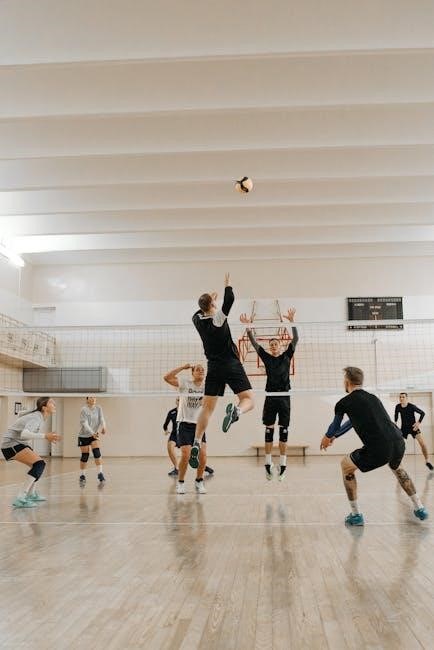
Day 1: Foundational Skills & Conditioning
This initial day focuses on building a strong base‚ incorporating warm-ups‚ passing‚ serving‚ and core work – essential for any volleyball athlete’s progression․
Warm-up Routine (15 minutes)
Begin with dynamic stretches like arm circles and leg swings to prepare muscles for activity‚ increasing blood flow and flexibility before more intense drills․
Passing Drills (30 minutes)
Focus on platform control and consistent passing technique‚ utilizing partner passing and target practice to improve accuracy and reaction time on the court․
Serving Practice (20 minutes)
Work on underhand and overhand serves‚ emphasizing consistent contact and aiming for specific zones‚ building a foundation for more advanced serving techniques․
Core Strengthening (20 minutes)
Engage in exercises like planks‚ crunches‚ and Russian twists to strengthen core muscles‚ crucial for stability‚ power transfer‚ and injury prevention in volleyball․
Warm-up Routine (15 minutes)
A comprehensive warm-up is paramount‚ preparing the body for the demands of volleyball training․ Begin with five minutes of light cardio‚ such as jogging or jumping jacks‚ to elevate heart rate and increase blood flow․
Follow this with dynamic stretching‚ including arm circles‚ leg swings‚ torso twists‚ and high knees‚ for approximately ten minutes․ These movements enhance flexibility and range of motion‚ reducing the risk of injury․ Prioritize movements that mimic volleyball actions‚ preparing muscles specifically for the skills practiced during the session․
Passing Drills (30 minutes)
Passing is a foundational skill‚ demanding precise technique and consistent control․ Start with partner passing‚ focusing on forming a stable platform with forearms and directing the ball accurately to the target․
Progress to drills involving movement‚ requiring players to react quickly and adjust their platform accordingly․ Incorporate target practice‚ aiming for specific zones on the court to enhance precision․ Emphasize low stances and quick footwork‚ crucial for efficient passing and ball control during gameplay․
Serving Practice (20 minutes)
Serving initiates every rally‚ making consistent accuracy vital․ Begin with underhand serves‚ focusing on a smooth pendulum motion and contacting the ball at waist level․ Transition to overhand serves‚ emphasizing proper toss technique and a full arm swing for increased power․
Practice aiming for specific zones on the court‚ targeting weak spots in the opponent’s defense․ Focus on consistency and minimizing errors‚ building a reliable serving foundation for future advanced techniques;
Core Strengthening (20 minutes)
A strong core is fundamental for volleyball performance‚ providing stability and power transfer․ Begin with planks‚ holding for 30-60 seconds to engage all core muscles․ Incorporate crunches‚ focusing on controlled movements and proper form to avoid strain․
Add Russian twists with or without weight‚ targeting obliques for rotational power․ These exercises enhance balance‚ agility‚ and injury prevention‚ crucial for explosive movements on the court and overall athletic conditioning․
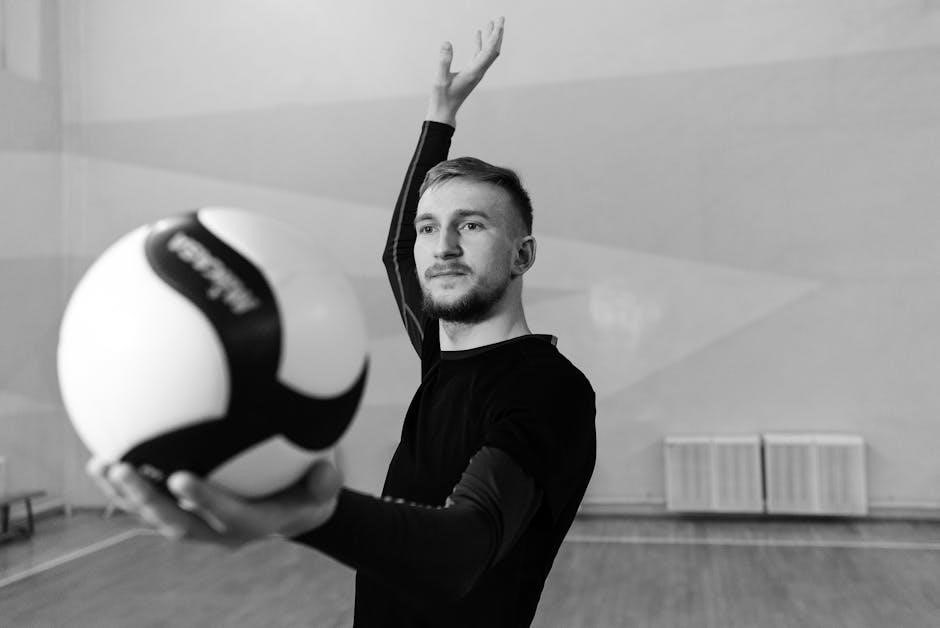
Day 2: Offensive Techniques & Agility
Today’s focus shifts to attacking skills‚ refining footwork‚ hitting technique‚ and agility‚ complemented by shoulder prehab to prevent injuries during intense training․
Approach Footwork (25 minutes)
Mastering the approach is vital for powerful hitting․ This session emphasizes a consistent four-step approach‚ focusing on rhythm‚ timing‚ and explosiveness․ Players will practice various approach angles‚ starting slowly and gradually increasing speed․ Drills include approach-only repetitions‚ followed by hitting into a net or with a partner․
Coaches should provide feedback on footwork mechanics‚ ensuring proper weight transfer and a smooth transition into the jump․ Utilizing visual cues and repetition will reinforce correct technique‚ building a solid foundation for offensive success․
Hitting Technique Refinement (35 minutes)
This session focuses on optimizing hitting mechanics‚ emphasizing proper arm swing‚ wrist snap‚ and body rotation․ Players will work on hitting from various positions‚ focusing on accuracy and power․ Drills include hitting lines‚ approach-and-hit repetitions‚ and targeted hitting exercises․
Coaches will provide individualized feedback on technique‚ addressing common errors and promoting efficient movement patterns․ Emphasis will be placed on hitting with both topspin and flat-footed techniques‚ adapting to different game situations and maximizing offensive versatility․
Agility Ladder Drills (15 minutes)
This segment concentrates on enhancing footwork and quickness‚ vital for reacting swiftly on the court․ Players will navigate the agility ladder with various patterns – in-and-outs‚ lateral shuffles‚ and hops – improving coordination and speed․
These drills simulate the rapid movements required in volleyball‚ boosting agility and reaction time; Coaches will emphasize proper technique and controlled movements‚ ensuring players maintain balance and efficiency while maximizing the benefits of this dynamic training component․
Shoulder Prehab Exercises (15 minutes)
Prioritizing shoulder health is crucial for volleyball players due to the repetitive overhead motions․ This session focuses on preventative exercises like rotator cuff strengthening with resistance bands and scapular stabilization drills․
These exercises aim to improve shoulder stability‚ reduce the risk of injury‚ and enhance overall performance․ Proper form is emphasized to ensure effectiveness and prevent further strain․ Consistent prehab routines are vital for long-term shoulder health and athletic longevity․
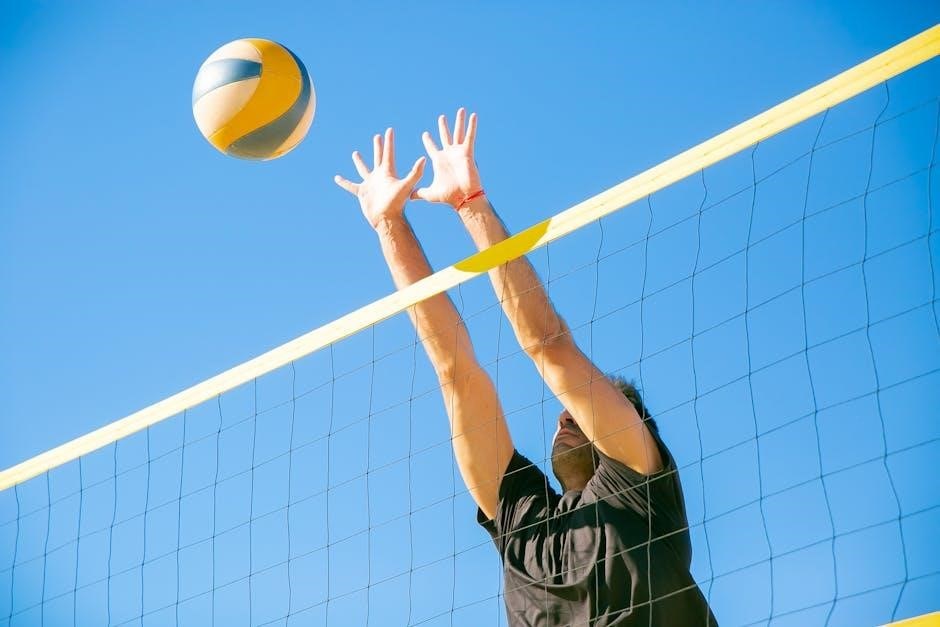
Day 3: Defensive Skills & Endurance
Today’s focus is on defensive prowess and stamina‚ incorporating digging‚ blocking‚ cardio‚ and lower body strength training for well-rounded development․
Digging Technique (30 minutes)
Master proper digging form‚ focusing on quick reactions and controlled platform movements to effectively defend against attacks․
Blocking Fundamentals (25 minutes)
Learn essential blocking techniques‚ including footwork‚ hand positioning‚ and timing to create a solid defensive wall at the net․
Cardiovascular Endurance Training (30 minutes)
Improve stamina with interval running or shuttle runs‚ enhancing the ability to maintain high performance throughout matches․
Lower Body Strength Training (20 minutes)
Strengthen legs with squats and lunges‚ building power and stability for jumping‚ digging‚ and overall court movement․
Digging Technique (30 minutes)
This session concentrates on mastering the art of the dig‚ a crucial defensive skill in volleyball․ Begin with a proper ready position – low center of gravity‚ weight balanced‚ and arms extended; Players will practice reacting to driven balls‚ focusing on quick footwork and efficient platform formation․
Drills will include partner digging‚ where one player spikes and the other digs‚ emphasizing controlled platform angles and consistent ball control․ Coaches will provide feedback on hand positioning‚ body positioning‚ and the importance of absorbing impact․ The goal is to develop quick reflexes and the ability to convert attacks into offensive opportunities․
Blocking Fundamentals (25 minutes)
This segment introduces the core principles of effective blocking‚ a vital skill for shutting down opponent attacks․ Players will learn proper hand positioning – fingers spread‚ palms facing the net – and the importance of timing and jump coordination․
Drills will focus on footwork to close the block‚ reading the attacker‚ and forming a solid wall․ Emphasis will be placed on penetrating the net with hands and maintaining a strong‚ stable block․ Coaches will provide guidance on individual and team blocking strategies‚ aiming to disrupt the opponent’s offense․
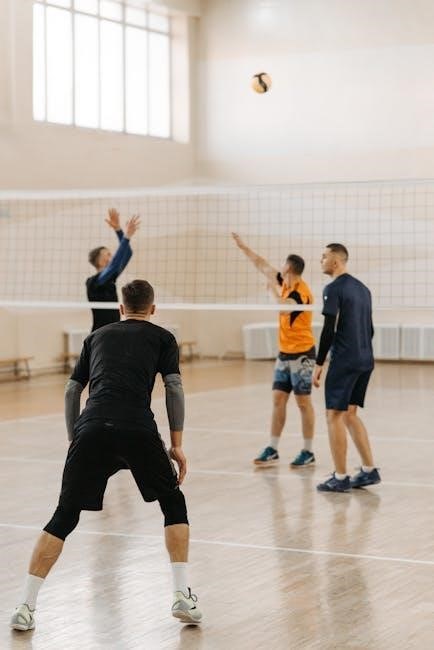
Cardiovascular Endurance Training (30 minutes)
This session prioritizes building stamina and resilience‚ essential for sustaining performance throughout lengthy matches․ Athletes will engage in interval training‚ alternating between high-intensity bursts and periods of active recovery‚ mimicking the demands of game play․
Activities may include shuttle runs‚ jump rope‚ or distance running‚ tailored to individual fitness levels․ The goal is to improve the cardiovascular system’s efficiency‚ enabling players to maintain agility and power while minimizing fatigue during crucial moments on the court․
Lower Body Strength Training (20 minutes)
This segment concentrates on developing explosive power and stability in the legs‚ vital for jumping‚ landing‚ and quick movements․ Exercises will include squats‚ lunges‚ and calf raises‚ performed with proper form to maximize effectiveness and minimize injury risk․
Focus will be placed on strengthening key muscle groups – quads‚ hamstrings‚ and glutes – to enhance vertical jump height and overall athletic performance․ Incorporating plyometric variations can further boost explosive power․
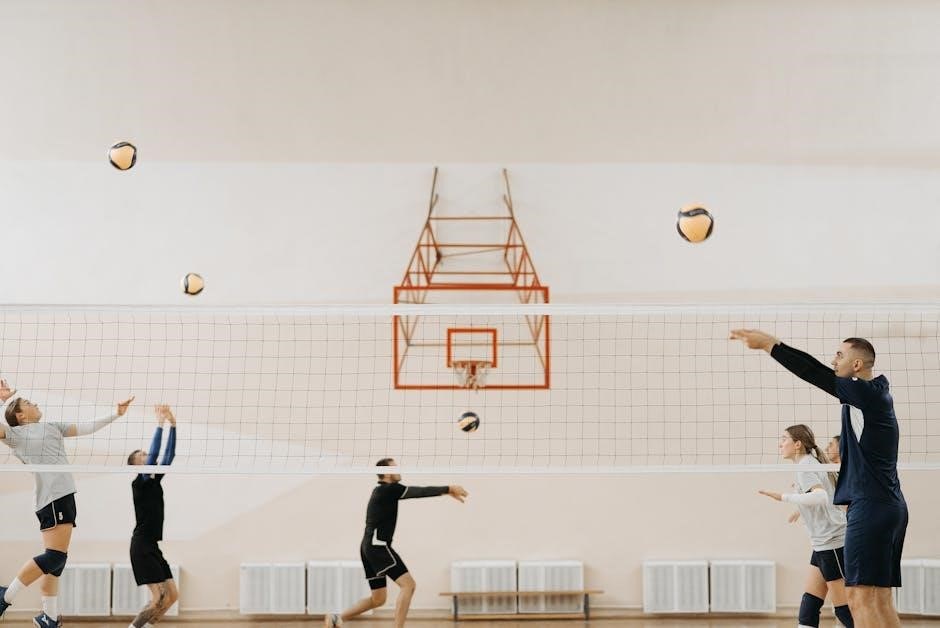
Day 4: Game Simulation & Tactical Awareness
Today emphasizes applying skills in a game context‚ with scrimmages‚ communication drills‚ position-specific training‚ and a crucial cool-down period․
Scrimmage (45 minutes)
Engage in a full-court scrimmage to simulate game conditions‚ allowing players to practice skills and strategies in a competitive environment․
Team Communication Drills (20 minutes)
Practice clear and concise communication on the court‚ focusing on calling plays‚ covering positions‚ and providing feedback to teammates․
Position-Specific Training (25 minutes)
Players focus on drills tailored to their specific positions‚ refining techniques and strategies relevant to their roles on the team․
Cool-down & Stretching (10 minutes)
Conclude with static stretches to improve flexibility‚ reduce muscle soreness‚ and promote recovery after intense gameplay․
Scrimmage (45 minutes)
The 45-minute scrimmage is the cornerstone of tactical application․ This session simulates a real game‚ demanding players integrate all previously learned skills – serving‚ passing‚ hitting‚ and blocking – under pressure․ Focus should be on implementing team strategies and adapting to dynamic game situations․
Coaches should observe player performance‚ providing real-time feedback on positioning‚ decision-making‚ and communication․ Encourage players to experiment with different offensive and defensive formations․ The scrimmage isn’t just about winning; it’s about identifying areas for improvement and fostering a cohesive team dynamic․
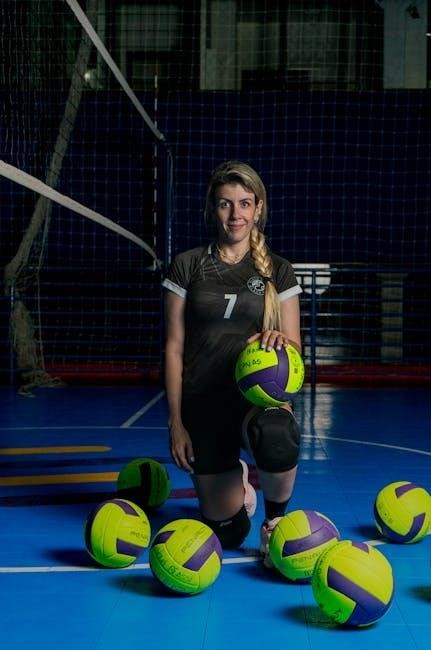
Rotate players frequently to ensure everyone gets ample opportunity to practice in various roles and scenarios․
Team Communication Drills (20 minutes)
Effective communication is paramount in volleyball‚ and this drill focuses on honing those skills․ Implement drills requiring clear‚ concise calls for coverage‚ setting intentions‚ and blocking assignments․ Practice using both verbal and non-verbal cues to convey information quickly and accurately during fast-paced play․
Simulate game-like scenarios where players must communicate under pressure․ Coaches should emphasize the importance of positive and encouraging language․ This builds trust and fosters a collaborative team environment‚ crucial for success on the court․
Focus on active listening and responding appropriately to teammates’ calls․
Position-Specific Training (25 minutes)
This segment tailors drills to individual player roles‚ maximizing skill development․ Setters refine setting accuracy and decision-making‚ while hitters focus on approach footwork and hitting angles․ Middles practice quick attacks and blocking techniques‚ and liberos enhance digging and passing consistency․
Outside hitters work on hitting lines and shot selection․ Coaches provide personalized feedback‚ addressing specific weaknesses and reinforcing strengths․ This targeted approach ensures each player contributes optimally to the team’s overall performance․
Drills should mimic game situations‚ promoting realistic skill application․
Cool-down & Stretching (10 minutes)
This final phase is crucial for muscle recovery and injury prevention․ Begin with a light jog or walk to gradually decrease heart rate․ Static stretches‚ holding each for 30 seconds‚ target major muscle groups used during training – quads‚ hamstrings‚ calves‚ shoulders‚ and back․
Focus on deep breathing to promote relaxation and reduce muscle soreness․ Proper cool-down minimizes stiffness and prepares the body for subsequent training sessions․
Consistent stretching improves flexibility and range of motion‚ enhancing overall athletic performance․
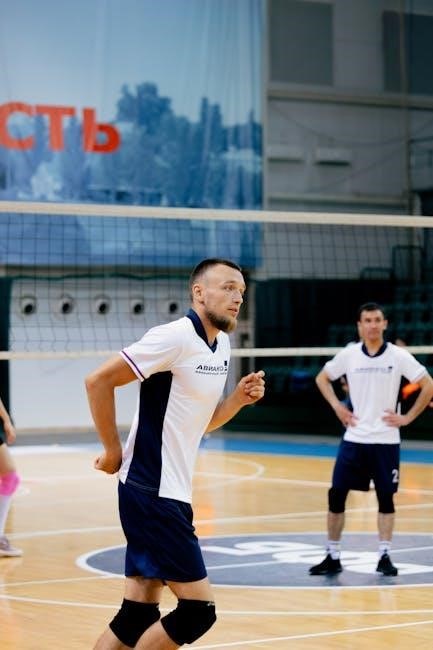
Day 5: Advanced Serving & Receiving
This day refines serving techniques and reception skills‚ focusing on jump serves‚ float serves‚ and strategic serve receive patterns for competitive play․
Jump Serve Practice (30 minutes)
Dedicated practice for the jump serve is crucial for adding power and unpredictability to your serve․ Begin with form drills‚ focusing on the toss‚ approach‚ and contact point․ Gradually increase jump height and swing speed‚ ensuring consistent technique․
Players should aim for specific zones on the court‚ practicing both power and placement․ Incorporate variations in spin and trajectory to challenge receivers․ Remember to prioritize proper landing technique to minimize injury risk․ This session builds upon foundational serving skills‚ elevating them to an advanced level․
Float Serve Mastery (20 minutes)
Refine the float serve‚ a deceptive weapon relying on minimal spin․ Focus on a consistent contact point – the heel of the hand – and a relaxed wrist․ Practice generating a flat trajectory‚ aiming to disrupt the receiver’s timing․
Drills should emphasize accuracy and control‚ targeting specific areas of the court․ Experiment with varying contact force to alter the serve’s speed and movement․ Mastering the float serve adds a valuable dimension to your serving arsenal‚ creating opportunities for easy points․
Serve Receive Patterns (30 minutes)
Develop strategic positioning and communication for effective serve receive․ Practice reading the server’s tendencies and anticipating the ball’s trajectory; Implement pre-determined coverage zones‚ ensuring all areas of the court are accounted for․
Drills should focus on quick reactions‚ precise passing‚ and seamless transitions to the setter․ Emphasize clear verbal cues and collaborative movement․ Mastering serve receive patterns minimizes errors and establishes a strong offensive foundation․
Wrist Strengthening Exercises (10 minutes)
Focus on building wrist stability and power‚ crucial for serving‚ setting‚ and blocking․ Incorporate exercises like wrist curls‚ reverse wrist curls‚ and grip strengtheners․ Utilize light dumbbells or resistance bands to progressively increase intensity․
Proper wrist strength minimizes injury risk and enhances control during critical volleyball actions․ Consistent practice improves ball handling precision and overall performance․ Prioritize correct form to maximize effectiveness and prevent strain․
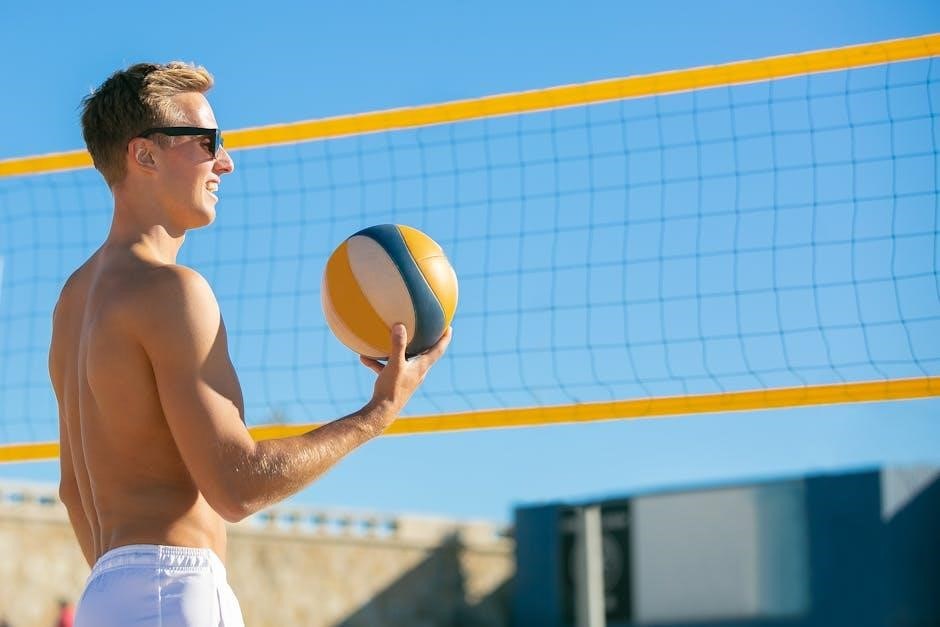
Day 6: Power & Explosiveness Training
This day emphasizes maximizing athletic power‚ utilizing plyometrics‚ vertical jump drills‚ and upper body exercises to enhance explosive movements on the court․
Plyometric Exercises (30 minutes)
Perform box jumps‚ depth jumps‚ and medicine ball throws to develop explosive power in legs and core‚ improving jump height and quickness․
Vertical Jump Training (25 minutes)
Focus on jump technique and power generation through exercises like squat jumps and lunge jumps‚ maximizing vertical leap for blocking and hitting․
Upper Body Power Development (20 minutes)
Incorporate exercises like push-ups with clap and medicine ball chest passes to enhance upper body power for serving and attacking․
Dynamic Stretching (15 minutes)
Complete dynamic stretches to improve range of motion and prepare muscles for explosive movements‚ reducing injury risk and optimizing performance․
Plyometric Exercises (30 minutes)
Plyometrics are crucial for developing explosive power‚ a key component of volleyball performance․ Begin with box jumps‚ focusing on controlled landings and maximizing jump height․ Incorporate depth jumps‚ emphasizing quick ground contact time and reactive power․
Medicine ball throws‚ both overhead and chest passes‚ enhance upper body explosiveness․ Cone hops and lateral bounds improve agility and lateral power․ Remember proper form is paramount to prevent injuries․ This session builds the foundation for higher jumps‚ faster spikes‚ and quicker reactions on the court‚ ultimately elevating your game․
Vertical Jump Training (25 minutes)
This session directly targets jump height‚ vital for blocking and spiking․ Start with squat jumps‚ focusing on full range of motion and explosive extension․ Progress to tuck jumps‚ bringing knees to chest for increased power․ Implement single-leg hops‚ building unilateral strength and balance․
Weighted jumps‚ using a light vest or dumbbells‚ can further challenge muscles․ Prioritize proper landing mechanics to minimize impact․ Consistent practice enhances leg power and coordination‚ translating to improved performance during game situations and maximizing your aerial reach․
Upper Body Power Development (20 minutes)
Focus on exercises that enhance spiking and blocking power․ Begin with medicine ball throws – chest passes and overhead slams – for explosive strength․ Incorporate plyometric push-ups‚ emphasizing a quick‚ powerful extension․ Resistance band work‚ simulating arm swings‚ builds shoulder stability and speed․
Light dumbbell bench presses and rows improve overall upper body strength․ Prioritize controlled movements and proper form to prevent injury․ This targeted training boosts hitting velocity and blocking effectiveness‚ contributing to a more dominant presence at the net․
Dynamic Stretching (15 minutes)
Prepare muscles for explosive movements with active stretches․ Include arm circles‚ leg swings (forward‚ backward‚ and lateral)‚ torso twists‚ and walking lunges with a twist․ High knees and butt kicks increase blood flow and flexibility․ Focus on controlled movements through a full range of motion․
Dynamic stretching enhances performance and reduces injury risk compared to static stretching before activity․ This prepares the neuromuscular system for the demands of volleyball‚ improving agility and power output during training and competition․

Day 7: Recovery & Skill Integration
The final day prioritizes recovery and applying learned skills through active recovery‚ full-court play‚ video analysis‚ and injury prevention review․
Active Recovery Session (30 minutes)
Light cardio‚ like walking or swimming‚ promotes blood flow and reduces muscle soreness‚ aiding in recovery after a week of intense training․
Full-Court Scrimmage (40 minutes)
Implement skills in a game setting‚ focusing on teamwork and tactical awareness‚ providing a practical application of the week’s training․
Video Analysis & Feedback (20 minutes)
Review game footage to identify areas for improvement‚ offering constructive feedback to enhance individual and team performance․
Injury Prevention & RICE Protocol Review (10 minutes)
Reinforce injury prevention strategies and the RICE protocol (Rest‚ Ice‚ Compression‚ Elevation) for effective injury management․
Active Recovery Session (30 minutes)
This session is crucial for muscle repair and reducing soreness after a demanding week of volleyball training․ Focus on low-intensity activities that promote blood flow without causing further strain․ A light jog‚ swimming‚ or cycling for 20 minutes is ideal․
Follow this with 10 minutes of static stretching‚ holding each stretch for 30 seconds․ Concentrate on major muscle groups used in volleyball – legs‚ shoulders‚ and core․ This helps improve flexibility and range of motion‚ preparing the body for continued training or competition․
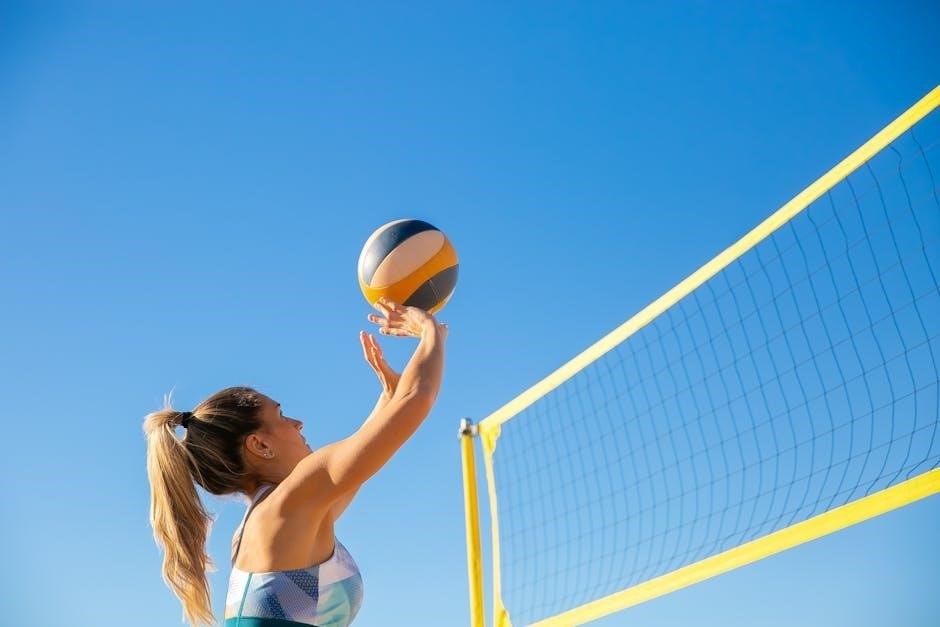
Full-Court Scrimmage (40 minutes)
This is the culmination of the week’s training‚ applying learned skills in a game-like setting․ Divide players into teams and emphasize implementing tactical awareness and communication strategies․ Focus on rotations‚ covering positions‚ and making quick decisions under pressure․
Encourage players to utilize all skills practiced throughout the week – serving‚ passing‚ setting‚ hitting‚ and blocking․ This provides valuable experience and identifies areas for continued improvement․ A competitive yet supportive environment is key for maximizing learning and enjoyment․
Video Analysis & Feedback (20 minutes)
Utilize recorded footage from the full-court scrimmage to provide constructive feedback on individual and team performance․ Focus on technical aspects like hitting form‚ blocking technique‚ and passing accuracy․ Analyze tactical decisions‚ rotations‚ and communication effectiveness․
Highlight both strengths and areas needing improvement‚ offering specific suggestions for development․ This visual learning tool enhances understanding and accelerates skill acquisition․ Encourage open discussion and peer feedback for a collaborative learning experience․
Injury Prevention & RICE Protocol Review (10 minutes)
Reinforce proactive measures to minimize volleyball-related injuries‚ emphasizing proper warm-up routines and dynamic stretching․ Review common injury sites – ankles‚ knees‚ and shoulders – and preventative exercises․
Reiterate the RICE protocol (Rest‚ Ice‚ Compression‚ Elevation) for acute injury management․ Ensure players understand when to seek medical attention․ Promote a culture of self-awareness and responsible training practices to prioritize long-term athlete health and well-being․
Off-Season Training Considerations
Utilize the off-season for comprehensive athletic development‚ focusing on foundational strength and conditioning․ Incorporate cross-training activities like swimming or cycling to maintain cardiovascular fitness without overuse injuries․
Prioritize full-body strength training‚ addressing muscle imbalances and building a robust physical base․ Continue agility and plyometric work at a reduced volume․ Emphasize flexibility and mobility to prepare for the demands of pre-season training and enhance overall athletic performance․
Pre-Season Training Focus
Shift the focus towards volleyball-specific skills and high-intensity conditioning․ Increase training volume gradually‚ emphasizing technique refinement in serving‚ passing‚ hitting‚ and blocking․ Implement agility drills mirroring game movements to enhance court responsiveness․
Introduce more complex offensive and defensive systems‚ fostering team cohesion and tactical awareness․ Prioritize injury prevention with consistent warm-up and cool-down routines․ Simulate game scenarios through scrimmages‚ preparing athletes for the competitive demands of the season․
In-Season Maintenance Workouts
Prioritize recovery and skill maintenance during the competitive season․ Reduce training volume to prevent overtraining and fatigue‚ focusing on short‚ high-intensity workouts․ Incorporate active recovery sessions like light cardio and stretching to promote muscle repair and reduce soreness․
Continue core strengthening and injury prevention exercises․ Refine technical skills through focused drills‚ maintaining sharpness without excessive strain․ Monitor athlete fatigue levels and adjust workouts accordingly‚ ensuring peak performance throughout the season․
Nutrition for Volleyball Players
Fueling performance requires a balanced diet rich in carbohydrates for energy‚ lean proteins for muscle repair‚ and healthy fats for overall health․ Prioritize complex carbohydrates like whole grains and fruits‚ providing sustained energy throughout training and matches․ Ensure adequate protein intake to support muscle recovery and growth․
Focus on nutrient-dense foods‚ avoiding processed snacks and sugary drinks․ Individual needs vary based on training intensity and body composition‚ so personalized nutrition plans are beneficial․
Hydration Strategies
Maintaining optimal hydration is paramount for volleyball performance‚ as dehydration significantly impacts endurance‚ strength‚ and cognitive function․ Drink water consistently throughout the day‚ not just during training sessions․ Electrolyte-rich beverages can replenish lost minerals during intense workouts‚ preventing cramping․
Monitor urine color – pale yellow indicates adequate hydration․ Avoid sugary drinks‚ opting for water or diluted juice․ Individual hydration needs vary‚ so adjust intake based on sweat rate and environmental conditions․
Importance of Sleep & Recovery
Adequate sleep and recovery are non-negotiable for volleyball athletes‚ allowing muscles to repair and rebuild after strenuous training․ Aim for 8-10 hours of quality sleep each night to optimize performance and reduce injury risk․ Incorporate active recovery sessions‚ like light walking or stretching‚ to promote blood flow․
Prioritize rest days to prevent overtraining․ Listen to your body and address any soreness or fatigue promptly․ Proper recovery enhances adaptation and maximizes the benefits of your training program․
Common Volleyball Injuries & Prevention
Volleyball presents risks like sprains‚ strains‚ and shoulder injuries․ Prevention hinges on proper warm-up‚ conditioning‚ and technique․ Strengthen rotator cuff muscles to stabilize the shoulder joint․ Utilize the RICE protocol – rest‚ ice‚ compression‚ elevation – for acute injuries․
Focus on ankle stability exercises to prevent sprains․ Consistent stretching improves flexibility and reduces muscle strains․ Prioritize proper landing mechanics to minimize impact forces and safeguard joints․
Warm-up & Cool-down Best Practices
Effective warm-ups are crucial‚ beginning with light cardio like jogging‚ followed by dynamic stretching – arm circles‚ leg swings – to increase blood flow and prepare muscles․ Cool-downs should involve static stretching‚ holding each stretch for 20-30 seconds․
Prioritize movements mimicking volleyball actions․ A proper cool-down reduces muscle soreness and improves flexibility․ Consistent application of these practices minimizes injury risk and optimizes performance throughout the 7-day program․
Drill Modifications for Skill Levels
Adapting drills is key for inclusivity․ Beginners can use Volley Lites for easier control‚ focusing on fundamental techniques with simplified passing and serving drills․ Intermediate players can increase drill speed and complexity‚ adding movement and strategic elements․
Advanced athletes can incorporate competitive scenarios and refine advanced skills․ Adjust repetition counts and rest periods based on fitness levels․ This ensures all players are challenged appropriately‚ maximizing progress within the 7-day program․
Using Volley Lites for Beginners
Volley Lites are ideal for novice players‚ offering a lighter‚ softer alternative to standard volleyballs․ This reduces fear of impact and enhances control during passing and setting drills․ Beginners can build confidence with easier ball handling‚ focusing on proper technique without excessive force․
Utilize Volley Lites for introductory drills‚ emphasizing form over power․ This allows for quicker skill acquisition and a more positive learning experience‚ laying a solid foundation for future development within the program․
Circuit Training Variations
Adapt circuit training for diverse fitness levels by modifying exercises and rest periods․ Incorporate volleyball-specific movements like jump squats‚ lunge rotations‚ and medicine ball throws for enhanced power and agility․ Vary the circuit each session to prevent plateaus and maintain engagement․
Introduce timed intervals‚ cone drills‚ and plyometric variations to challenge athletes․ Focus on explosive movements and quick transitions‚ mirroring the demands of a fast-paced volleyball match‚ improving overall conditioning․
Alternative Exercises (No Volleyball)
When volleyball access is limited‚ maintain fitness with bodyweight exercises like push-ups‚ squats‚ and lunges․ Incorporate planks and core work for stability‚ crucial for volleyball movements․ Utilize resistance bands for strength training‚ mimicking spiking and blocking actions․
Focus on cardiovascular health through running‚ cycling‚ or swimming․ These alternatives build endurance and maintain overall fitness levels‚ preparing athletes for the demands of the court when volleyball practice resumes․
Monitoring Training Intensity
Effectively track progress and prevent overtraining by utilizing the Rate of Perceived Exertion (RPE) scale‚ allowing athletes to self-assess workout difficulty․ Heart rate monitoring provides objective data‚ ensuring training stays within appropriate zones for endurance and power development․
Regularly assess fatigue levels and adjust training volume accordingly․ Prioritize adequate rest and recovery to optimize performance and minimize injury risk‚ crucial components of a successful volleyball program․
Progressive Overload Principles
Gradually increase training demands to continually challenge the body and stimulate adaptation‚ essential for long-term improvement․ This involves incrementally increasing weight‚ repetitions‚ sets‚ or intensity over time‚ avoiding plateaus and maximizing gains․
Ensure overload is balanced with adequate recovery to prevent overtraining and injury․ Monitor athlete response and adjust progression based on individual needs‚ fostering consistent and sustainable performance enhancements throughout the program․